


Social Aspects of Preventive Medicine: A Legal Analysis

https://doi.org/10.17803/lexgen-2026-5-2-7-23

Abstract
In the context of pandemic threats, global population aging, and recurring health system crises, including those affecting developed countries, the importance of disease prevention is steadily increasing. Health policies worldwide are placing greater emphasis on preventive medicine and the promotion of healthy lifestyles. New approaches to the concept of public health are emerging, along with the development of healthcare models that rely on digital algorithms for processing public health data. These technologies can facilitate the development of measures to improve population health and promote health-saving policies with an emphasis on wellbeing and healthy aging.
In this study, the author sets out to analyze the social aspects of implementing preventive healthcare mechanisms from the legal perspective. Preventive medicine is not a new phenomenon in Russia. Thus, during the Soviet era, preventive healthcare measures in the form of vaccination, hardening of the body, and systematic physical exercise constituted the cornerstone of public health policy. Today, significant attention is paid to population health screening and the early detection of diseases. Meanwhile, contemporary preventive healthcare relies on advanced digital technologies, thus acquiring new dimensions beyond traditional measures such as medical examinations and immunoprophylaxis. This gives rise to new legal challenges that require analysis.
Preventive medicine is inherently personalized, since it takes into account an individual’s physiological, biological, anatomical, mental, and behavioral characteristics. At the same time, preventive strategies may also be population-based, addressing the shared geographical, social, genetic, and demographic characteristics of specific communities. This contributes to the emergence of a new healthcare paradigm that aims to deliver comprehensive, personalized medical care through the application of advanced technologies. Its successful implementation requires an appropriate legislative regulation that not only keeps pace with technological innovation but also safeguards the constitutional rights and freedoms associated with health protection.
As a result of the study, the main features that characterize the development of preventive medicine in Russia from the legal perspective were identified.
About the Author
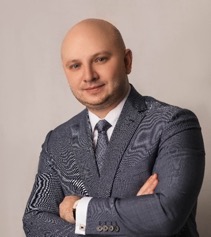
N. S. Volkova
Institute of Legislation and Comparative Law under the Government of the Russian Federation
Russian Federation
Russian Federation
Natalia S. Volkova, Candidate of Science (Law), Deputy Head of the Department of Social Legislation, Honored Lawyer of the Russian Federation
Moscow
References
1. Berg, L.N. (2023). Personalized medicine: the organizational and legal framework of the medicine of the future. Lex Genetica, 2(1), 7–23. (In Russ.). https://doi.org/10.17803/lexgen-2023-2-1-7-23
2. Budnik, R.A. (2025). Human rights in the realities of neuro-progress: legal means of compensation for neuro-technological risks. Journal of Russian Law, 29(3), 35–52. (In Russ.). https://doi.org/10.61205/S160565900032805-9
3. Ciacchella, C., Veneziani, G., Bagni, C., Campedelli, V., Del Casale, A., Lai, C. (2022). Escaping the reality of the pandemic: the role of hopelessness and dissociation in COVID-19 denialism. Journal of Personalized Medicine, 12(8), 1302. https://doi.org/10.3390/jpm12081302
4. De la Torre, K., Min, S., Lee, H., Kang, D. (2025). The application of preventive medicine in the future digital health era. Journal of Medical Internet Research, 27, e59165. https://doi.org/10.2196/59165
5. Dmitrieva M.V., Baryshnikovа, M.A., Orlova, O.L., Kosorukov, V.S. (2022). Technological aspects of creating neopeptide vaccines. Russian Journal of Biotherapy, 21(4), 10–21. (In Russ.). https://doi.org/10.17650/1726-9784-2022-21-4-10-21
6. Golubeva, E.Y., Soloviev, A.G. (2023). The WHO Decade of Healthy Ageing 2020–2030: a policy conception review in the gerontology context. Ekologiya cheloveka = Human Ecology, (7), 499–508. (In Russ.). https://doi.org/10.17816/humeco568625
7. Gubenko, M.I. (2008). Legal foundations of professional ethics of medical workers. Medical Law, (4), 17–21. (In Russ.).
8. Irfan, B., Jaber, B., Awwad, M., AlSourani, T., Shammala, A.A. (2025). Examining Contemporary human dignity: how human rights evolve and reshape health justice. Cureus, 17(4), e82316. https://doi.org/10.7759/cureus.82316
9. Khabrieva, T.Ya., Tikhomirov, Yu.A. (2024). Scientific concepts of the development of Russian legislation: monograph. Moscow: Norma. (In Russ.).
10. Konovalov, A.A., Pozdnyakova, M.A. (2020). Organization of preventive medicine in some European countries (review). Medical Almanac, (1(62)), 8–19. (In Russ.).
11. Krylatova, I.Yu. (2022). The constitutional category of human dignity in the relationship between the moral foundations of bioethics and medicine. Constitutional and Municipal Law, (8), 5–40. (In Russ.).
12. Libanova, S.E., Krylatova, I.Yu. (2025). Modern constitutional and bioethical values: legal and ethical aspects. Lex Genetica, 4(4), 7–27. (In Russ.). https://doi.org/10.17803/lexgen-2025-4-4-7-27
13. Lu, B., Lim, J.M., Yu, B., Song, S., Neeli, P., Sobhani, N., ... Chai, D. (2024). The next-generation DNA vaccine platforms and delivery systems: advances, challenges and prospects. Frontiers in Immunology, 15, 1332939. https://doi.org/10.3389/fimmu.2024.1332939
14. Malichenko, V.S., Putilo, N.V. (2026). Medicine and Technology: Issues of Law, Social Policy, and National Security. Moscow: Institute of Legislation and Comparative Law under the Government of the Russian Federation: INFRA-M. (In Russ.).
15. Mello, M.M. (2022, March). Vaccine misinformation and the First Amendment – the price of free speech. JAMA Health Forum, 3(3), e220732–e220732. https://doi.org/10.1001/jamahealthforum.2022.0732
16. Mityachkina, E.S. (2025). Medical denialism: preventive legal means and forms of confrontation. Medical Law, (2), 36–39. (In Russ.).
17. Persaud, N., Sabir, A., Woods, H., Sayani, A., Agarwal, A., Chowdhury, M., ... Lofters, A. (2023). Preventive care recommendations to promote health equity. Canadian Medical Association journal, 195(37), E1250–E1273. https://doi.org/10.1503/cmaj.230237
18. Putilo, N.V. Volkova, N.S. (2020). The “Nanny state” Phenomenon: A New Kind of State or a Modification of State Paternalism in Modern Conditions? Journal of Russian Law, (12), 19–31. https://doi.org/10.12737/jrl.2020.144
19. Putilo, N.V., Volkova N.S. (2022). Digital medicine technology development: protection of the rights and legal interests of patients in the context of integration. Advances in Research on Russian Business and Management, 2022, 347–361.
20. Putilo, N.V. (2023). Legal policy of the state in the field of public health. Moscow: Prospect. (In Russ.).
21. Putilo, N.V., Volkova, N.S. (2011). Normative-legal support of the rights and obligations of citizens in the field of immunoprophylaxis. Journal of Russian Law, (12), 30–38. (In Russ.).
22. Savin, S.D., Smirnova, A.N. (2022). Preventive medicine in Russia: The problem of public (dis)trust. Vestnik of Saint Petersburg University. Sociology, 15(4), 405–423. (In Russ.). https://doi.org/10.21638/spbu12.2022.406
23. Scott, A.J. (2021). The longevity society. The Lancet Healthy Longevity, 2(12), e820–e827. https://doi.org/10.1016/S2666-7568(21)00247-6
24. Sedova, N.N. (2021). Informed voluntary consent of the patient to medical intervention: from a moral rule to a legal norm. Medical Law, (6), 6–12. (In Russ.).
25. Sinitsyn, S.A., Kabitov, P.P. (2026). Artificial Intelligence: Regulatory Challenges and Legal Solutions. Moscow: Institute of Legislation and Comparative Law under the Government of the Russian Federation, Infotropic Media. (In Russ.).
26. Suarez-Lledo, V., Alvarez-Galvez, J. (2021). Prevalence of health misinformation on social media: systematic review. Journal of Medical Internet Research, 23(1), e17187. https://doi.org/10.2196/17187
27. Tereshchenko, L.K. (2025). Digital platforms – an organizational and legal form of interaction in society. Moscow: Institute of Legislation and Comparative Law under the Government of the Russian Federation, Infotropic Media. (In Russ.).
28. Trofimova, A.A., Sannikov, A.L., Popov, V.V. (2021). Problems of Organizing Medical Care for the Elderly in the Russian Federation. Current problems of health care and medical statistics, (4), 570–591. (In Russ.). https://doi.org/10.24412/2312-2935-2021-4-570-591
29. Trukhanov, A.I., Chudakov, S.U. (2017). The Role of Preventive Medicine in the Social Policy of the Government. Bulletin of Rehabilitation Medicine, (1(77)), 8–17. (In Russ.).
30. Tsomartova F.V., Putilo N.V. (2023). Public Health: from the Principle of Healthcare Management to the Constitutional and Legal Value. Journal of Russian Law, 27(1), 93–109. (In Russ.).
31. Tsomartova, F.V. (2021). Law and biomedicine. Moscow: IZiSP: Norma: INFRA-M. (In Russ.).
32. Volkova N.S., Kalmykova A.V., Putilo N.V. (2022). Law in the fight against HIV denialism. Vlast' zakona [The Power of Law], (3(51)), 82–100. (In Russ.).
33. Vvedenskaya, O.Yu. (2024). The basic concept of preventive-predictive medicine and its importance in the development of modern healthcare. International Journal of Applied and Fundamental Research, (7), 11–17. (In Russ.). https://doi.org/10.17513/mjpfi.13642
Review
For citations:
Volkova N.S. Social Aspects of Preventive Medicine: A Legal Analysis. Lex Genetica. 2026;5(2):7-23. (In Russ.) https://doi.org/10.17803/lexgen-2026-5-2-7-23
Views:
126
JATS XML




 Email this article