Contents
Scroll to:
Scroll to:
Grin O.S. Editor-in-Chief Opening Remarks. Lex Genetica. 2025;4(4):5-6.
Dear Readers,
We are pleased to be able to present to you the fourth issue of Lex Genetica for 2025. The current issue includes works devoted to both fundamental legal and bioethical principles, as well as specific practical issues of regulating genetic and biomedical technologies.
In the first section entitled “Lex Genetica: Issues of Law and Bioethics,” S.E. Libanova and I.Yu. Krylatova address the issue of legal and ethical aspects of the relationship between modern constitutional and bioethical values. The article justifies the need to develop legal approaches to the regulation of biomedical technologies, while emphasizing the role of legal culture and intercultural dialogue in achieving a balance between technological progress and the protection of human rights.
The next section of the journal entitled “Lex Genetica: Public Law Dimension” brings together works on the issue of public law regulation in the biomedical sphere. The article by authors G.B. Romanovsky, O.V. Romanovskaya, and E.A. Romanovskaya deals with DNA as an object of legal regulation. The authors stress that the possibilities of genetic editing and the use of DNA for technological purposes (i.e., in biocomputing or as a data carrier) alter the understanding of the biological nature of humans and pose new legal challenges. The article by A.V. Kubyshkin focuses on the legal interpretation of the concept of “innovative medicinal product,” including an analysis of the legal regime governing the circulation of such products. The author notes that Russian legislation does not provide a uniform definition of an innovative drug, and legal doctrine does not offer a generally accepted approach to its content. Based on an analysis of academic sources and the views of the professional communities, various definitions are examined, and a distinction is made between innovative, original, and other types of drugs.
In the private law section, I.Z. Ayusheeva and D.A. Belova examine the protection of interests related to human biomaterial. This is a matter which lies at the intersection of personal rights, technology, and ethics. The article is devoted to defining the legal nature of various types of human biomaterial in the context of its expanding use in medicine and academic research. O.A. Enikeev analyzes the legal features of biobank bankruptcy. The paper identifies problems which can be summarized as follows: uncertainty about the legal status of biological material; the lack of rules for its evaluation and inclusion in the bankruptcy estate; and insufficient protection of the rights of donors and patients in the event of biobank insolvency. The author highlights the risks of unlawful disposal of biomaterial in bankruptcy proceedings.
The section entitled “Expert Commentary” features research by N.V. Zakharova, M. Bocharova, and A.Y. Gaiduk. The authors examine measures designed to prevent bias in academic research in personalized psychiatry: a field which relies on individual patient data (genetic indicators, biomarkers, lifestyle information). The authors also emphasize that the high sensitivity of such data requires strict quality control, transparency of all procedures, and mandatory compliance with ethical standards.
The issue concludes with an interview with E.V. Zhuravleva, Doctor of Agricultural Sciences, Professor at the Russian Academy of Sciences, whose views on the biotechnological development of the agro- industrial complex reveal a new dimension of interaction between science, business, and the state.
We hope that the materials in this issue will contribute to professional discussion and serve as a guide for practicing lawyers, researchers, and anyone interested in biolaw. We are grateful to the authors for their in-depth research and our readers for their continued interest and intellectual engagement.
We invite you to join the discussion and exchange your ideas.
Best regards,
Editor-in-Chief O.S. Grin
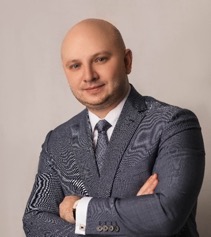
Oleg S. Grin, Ph.D. in Law ; Editor-In-Chief "Lex Genetica"
Moscow
Grin O.S. Editor-in-Chief Opening Remarks. Lex Genetica. 2025;4(4):5-6.
 Email this article (Login required)
Email the author (Login required)
Email this article (Login required)
Email the author (Login required) Editorial Office of the journal Lex Genetica,
9 Sadovaya-Kudrinskaya Str., Moscow 125993, Russian Federation